Mindfulness for Children: Why It Matters | FutureFit365
Written by
FutureFit365
Why Mindfulness Matters for Children: Building the Strongest Minds in Childhood
The Strongest Minds Begin in Childhood
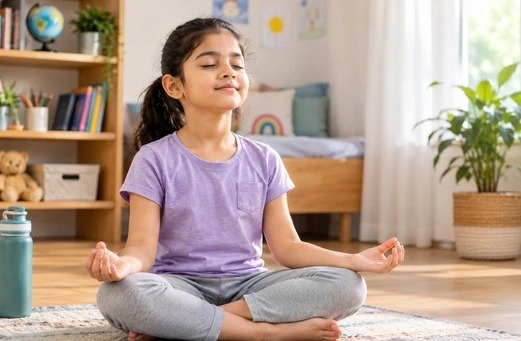
Mindfulness helps children notice their thoughts, feelings and body in the present moment, without judgement. Even 5 to 10 minutes of enjoyable practice each day can help children develop greater awareness, practise concentration and learn to respond to their emotions more thoughtfully.
This article is an expanded digital adaptation of Dr. Simple Bhadania's feature published in Gujarat Mail's Knowledge Mail on 19 November 2026.
Screens, homework, tuition, competitions and packed schedules. This is what a normal day looks like for many children today. Childhood is meant to be the most carefree phase of life, yet our children are growing up with constant stimulation and very little space to simply pause.
As parents and educators, we put a lot of energy into marks and physical fitness. Both matter. But one skill quietly shapes everything else: a child's ability to understand and manage their own mind. That skill is mindfulness, and it may be one of the most valuable gifts we can give our children.
At FutureFit365, we see this every day in our assessments here in Ahmedabad. Children who learn to pause, breathe and focus may find it easier to stay engaged in learning, handle everyday challenges and enjoy physical activities. This is why the Mind pillar sits at the heart of our Mind, Movement and Momentum approach.
What Is Mindfulness for Children?
Mindfulness is the practice of paying gentle, curious attention to the present moment, without judging it. For a child, this means becoming aware of what they are thinking, feeling and experiencing right now.
It can be as simple as:
• Taking three slow, deep breaths before an exam
• Listening carefully to the sounds around them
• Noticing how their body feels after running or playing
• Sitting quietly for one minute and focusing only on their breath
Mindfulness does not mean forcing a child to sit silently or switch off their thoughts. It teaches them to recognise thoughts and emotions, and then respond calmly instead of reacting on impulse. Think of it as a pause button your child learns to press on their own.
Why Do Children Need Mindfulness?
A child's brain is still developing. The areas that handle attention, emotional control, planning and decision-making keep maturing right through childhood and the teenage years. Mindfulness gives these growing skills daily practice, much like exercise strengthens growing muscles.
1. Better attention and concentration
Children switch their attention between many things, especially in a world full of digital distractions. Simple breathing and observation exercises give them practice in bringing their attention back to one task. This can be useful in the classroom, during homework and on the sports field. If you are worried about screen habits, our guide on why childhood fitness is the foundation of lifelong health shares practical ways to balance screen time with movement.
2. Healthier emotional regulation
Anger, frustration, excitement, disappointment and worry are all normal. Many children simply do not yet have the words or skills to express them well. Mindfulness can help them notice a feeling before they react, giving them a chance to respond more calmly instead of acting on impulse.
3. Less stress and anxiety
Exams, competitions, peer pressure and high expectations can weigh heavily on young minds. Mindful breathing and relaxation can give children simple tools they can use in everyday situations that feel stressful. With regular, pressure-free practice, children may become more familiar with ways to pause and settle themselves.
4. Stronger confidence and self-awareness
When children understand their strengths, emotions and limits without constantly comparing themselves to others, they build a healthier picture of who they are. This self-awareness supports confidence, independence and a positive self-image.
5. Better friendships and social skills
Mindfulness is not only about the individual. It also nurtures empathy, patience and active listening. Children who recognise their own emotions often find it easier to understand their friends, work well in teams and resolve disagreements kindly.
Mindfulness Is Not Just Meditation: 6 Simple Activities for Kids
Many parents believe mindfulness means sitting cross-legged with eyes closed for a long time. In reality, children learn it best when it is woven into everyday moments, kept short and made fun. Try these age-friendly activities:
Activity | How to do it | Time needed |
Belly breathing | Your child places a hand on their tummy and watches it rise and fall with each breath | 1 to 2 minutes |
Five senses game | Name 5 things you see, 4 you feel, 3 you hear, 2 you smell and 1 you taste | 3 minutes |
Mindful walking | Walk slowly and notice how each foot touches the ground | 5 minutes |
Gratitude moments | Share three things that made you happy today | 2 minutes |
Body check-in | After play or exercise, notice the heartbeat, breathing and how the muscles feel | 2 minutes |
Mindful listening | Close the eyes and pick out different sounds nearby | 2 minutes |
Even 5 to 10 minutes of regular, enjoyable practice can build a positive routine. The goal is consistency, not perfection.
How Mindfulness and Physical Fitness Work Together
Mind and body are deeply connected, and this link is often overlooked. When children take part in yoga, structured movement, sports and breathing exercises, they practise physical awareness and mental control at the same time.
• Balancing exercises need full concentration.
• Yoga builds body awareness and calm breathing.
• Team games develop cooperation and patience.
• Mindful breathing after exercise helps children relax and cool down.
This teaches children that fitness is not only about strength, speed or stamina. It is also about awareness, discipline, confidence and emotional resilience. Good body awareness also supports healthy alignment, something we explain in detail in Is Your Child's Posture at Risk?
And what a child eats affects mood and focus too. Read our parent's guide on whether your child is getting proper nutrition to complete the picture.
How Parents Can Teach Mindfulness at Home
You do not need special equipment or long training to bring mindfulness home. A few small daily habits can make a real difference:
1. Start the morning with two minutes of calm breathing together before the day gets busy.
2. Let your child express emotions instead of asking them to hide or suppress them.
3. Swap some screen time for outdoor play and quiet activities.
4. Practise gratitude before bedtime by sharing one good moment from the day.
5. Avoid judging feelings. It is okay for a child to feel angry, sad or anxious.
6. Lead by example. Children learn a lot about emotional control by watching the adults around them.
Most importantly, mindfulness should never become another performance target. Keep it playful and pressure-free, never a punishment. Parenting plays a huge role here, which is why we involve families at every step, as shared in How Parenting Is an Integral Part of the FutureFit Program. You can find more support on our Parents page.
Building Healthier Minds for a Healthier Generation
In today's competitive world, we prepare children to perform, compete and achieve. But are we also preparing them to handle failure, manage emotions, make thoughtful decisions and keep inner balance?
A truly healthy child is not only physically active or academically strong. They understand their emotions, adapt to challenges, build meaningful relationships and approach life with confidence.
At FutureFit365, we believe holistic child development must bring together physical fitness, nutrition, mental resilience, injury prevention and talent identification. Mindfulness, yoga, movement awareness and emotional development are core parts of this journey, guided by our team of doctors, physiotherapists, nutritionists and a child psychologist.
The goal is not simply to raise children who are stronger in their bodies, but to nurture individuals who are stronger in their minds.
Perhaps the most valuable lesson we can teach a child is this: you cannot always control what happens around you, but you can learn to understand and manage how you respond. Practised early, that lesson lasts a lifetime.
Start your child's journey
Every child is different. A FutureFit365 assessment looks at fitness, posture, nutrition habits and confidence for children aged 5 to 15, then builds a personal plan you can track in our parent app.
• Explore the FutureFit90 and FutureFit365 programmes
• Book your child's development assessment in Ahmedabad
• School leaders can partner with us for student wellbeing programmes
About the author: Dr. Simple Bhadania is the Founder and CEO of FutureFit365. She holds an MS in ENT and is an ACSM-certified youth fitness specialist from the American College of Sports Medicine. Read our story.
Frequently Asked Questions
At what age can children start mindfulness?
Children around 4 or 5 can begin with simple, playful activities like belly breathing and the five senses game. As they grow, sessions can become a little longer and more structured. FutureFit365 programmes are designed for children aged 5 to 15.
How long should a child practise mindfulness each day?
5 to 10 minutes a day is enough for most children. Short, regular practice usually works better than long, occasional sessions.
Is mindfulness the same as meditation?
No. Meditation is one form of mindfulness. For children, mindfulness also includes mindful walking, gratitude, body check-ins and paying full attention during play or meals.
Can mindfulness help with exam stress and anxiety?
Simple breathing techniques may help children pause and feel calmer before exams, matches or performances. They are not a substitute for professional support. If anxiety is persistent or severe, speak to a doctor or child psychologist.
Does FutureFit365 include mindfulness in its programme?
Yes. Mindset coaching and mental wellbeing are part of the Mind pillar in FutureFit365's Mind, Movement and Momentum approach, alongside fitness, posture and nutrition, for children aged 5 to 15 in Ahmedabad.
Ready to transform your child's fitness?
Explore our age-specific movement programs and clinical assessments.