Is Your Child's Posture at Risk? Understanding Modern Childhood Posture Problems
Written by
FutureFit365

Is your child's posture at risk?
Watch your child while they use a phone, do homework or play a video game. Does their head move forward? Do their shoulders round in? Do they stay in one position for a long time?
These habits are common. Long periods in one position can contribute to muscle fatigue or discomfort. The aim is not to make children sit perfectly straight all day, but to help them move regularly and use comfortable positions.
Frequent slouching, a forward head position, visibly uneven shoulders or hips, and recurring neck or back discomfort may deserve attention. Screen habits, prolonged sitting, an unsuitable study setup, heavy school bags and low activity can play a part. Home observations cannot diagnose a spinal condition.
What does good posture look like in a child?
Good posture is relaxed, not stiff. From the side, the ear, shoulder and hip should sit roughly in line. Children naturally change positions while sitting, so encourage movement rather than asking them to hold one rigid position.
Why can children develop posture problems?
Several everyday factors can influence posture and comfort:
1. Screen use: Looking down at a phone can bring the head and neck forward. A small study of 34 boys aged 5–12 found posture changes during smartphone use, especially while sitting. It does not prove permanent damage.
2. Long sitting: School, homework and screens can keep children in one position and contribute to muscle fatigue.
3. Study setup: Poorly sized furniture or studying while lying on a bed can make supported sitting harder.
4. School bags: A bag that is too heavy or poorly fitted may cause a child to lean forward or feel discomfort.
5. Low activity: Outdoor play, running, climbing and sport help develop general strength, fitness and bone health.
6. Individual differences: Growth spurts, body shape, confidence, vision and health conditions may influence movement.
A child who slouches does not automatically have a medical posture disorder. Persistent pain or visible asymmetry should be assessed professionally.
10 signs of poor posture parents can notice
Look for repeated patterns rather than judging your child from one moment:
· The head regularly sits forward of the shoulders.
· The shoulders appear rounded or the upper back persistently rounded.
· One shoulder or hip appears higher than the other.
· One shoulder blade looks more prominent.
· The child repeatedly slumps soon after sitting down.
· They often change position because sitting feels uncomfortable.
· They complain of neck, shoulder or back discomfort.
· They rub their neck or shoulders after using a device.
· They seem uncomfortable carrying a school bag.
· They have difficulty standing comfortably for everyday activities.
These signs are not a diagnosis. Persistent or increasing asymmetry should be checked by a healthcare professional.
A simple home observation checklist
Parents can notice changes without trying to diagnose a condition:
1. Side view: Ask your child to stand naturally. Notice whether the ear, shoulder and hip appear roughly aligned.
2. Back view: Look for persistent differences in shoulder height, shoulder blade position or waist shape.
3. Forward bend: If one side of the back or rib area appears higher, arrange a medical assessment. Clinicians may use the Adam's forward bend test when examining for scoliosis.
4. Sitting comfort: Notice whether your child can use their study space comfortably or needs frequent breaks because of pain.
This checklist cannot confirm or rule out scoliosis. A clinician may examine the spine and request imaging when needed.
What can happen when posture-related discomfort is ignored?
Occasional slouching is common and does not automatically indicate a disorder. However, uncomfortable positions held for long periods may contribute to muscle fatigue, stiffness or neck and back discomfort, making study, play or sport less comfortable.
A visible spinal curve or persistent uneven posture may sometimes be related to scoliosis or kyphosis. These conditions are different from ordinary slouching and need clinical assessment. Exercises should not be presented as a way to correct a structural spinal condition.
How heavy should a child's school bag be in India?
India's School Bag Policy 2020 recommends that a school bag weigh no more than 10% of the student's body weight.
Child's body weight | Suggested maximum bag weight (10%) |
20 kg | 2 kg |
25 kg | 2.5 kg |
30 kg | 3 kg |
40 kg | 4 kg |
50 kg | 5 kg |
Use both shoulder straps, keep the bag close to the back, pack heavy books near the back panel and remove unneeded items. Review the weight and fit if your child leans forward or reports pain.
An Indian study found an initial association between bags above 10% of body weight and musculoskeletal pain among children aged 10–16. The association was not significant after adjustment for other factors, so the study does not prove that bag weight alone caused pain.
How can parents support better posture?
Repeatedly telling a child to “sit straight” is unlikely to build lasting habits. Focus on enjoyable movement and a comfortable study setup.
Build body awareness
Use positive reminders to relax the shoulders, raise the screen or change position. Praise healthy habits.
Make movement part of the day
The World Health Organization recommends an average of at least 60 minutes of moderate-to-vigorous activity daily for children aged 5–17. Activities that strengthen muscles and bones should be included at least three days a week.
Outdoor play, cycling, swimming and sports all count. Children aged six and above with no pain or movement restrictions could try:
· Wall slides: Slowly slide the arms up and down against a wall. Try 8 repetitions.
· Cat and cow: On hands and knees, gently round and release the back. Try 8 repetitions.
· Bird dog: Extend the opposite arm and leg without twisting. Try 5 repetitions on each side.
· Glute bridge: Lie on the back with knees bent and lift the hips comfortably. Try 8 repetitions.
These are general movement ideas, not treatment. Stop if an activity causes pain. Ask a clinician to guide exercise if your child has persistent pain or a spinal condition.
Create a comfortable study setup
· Choose a suitable chair and desk, with feet supported.
· Support the back and raise the screen closer to eye level where practical.
· Encourage a short standing, stretching or walking break every 20–30 minutes during long study sessions.
· Avoid homework or gaming while lying on the bed for extended periods.
· Encourage your child to use both backpack straps.
Children copy adults, so take breaks yourself too.
When should you seek professional advice?
Arrange an assessment for recurring neck or back pain, visible spinal changes, persistent uneven shoulders or hips, or difficulty standing comfortably. Seek advice if pain worsens or affects sleep, school, play or sport.
Contact a doctor promptly if back pain comes with fever, unexplained weight loss, weakness, numbness, difficulty walking or pain that wakes your child. Loss of bladder or bowel control needs urgent medical attention.
How FutureFit365 supports children's movement and posture in Ahmedabad
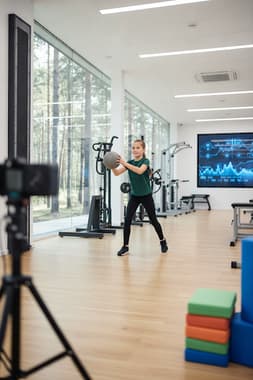
FutureFit365 works with children aged 5–15. Its Assessment Programme reviews posture, alignment, gait, flexibility, strength and stamina, with physiotherapy input.
The 12-week FutureFit90 programme starts with posture and movement screening, builds strength, mobility and healthy habits, and includes reassessment. FutureFit365 also describes app-based progress tracking and school movement sessions.
A posture or movement score can track progress within a programme, but it is not a medical diagnosis. Parents can review details on the FutureFit365 parents page and ask which assessment is suitable for their child.
Frequently asked questions
What causes poor posture in children?
Long periods sitting, looking down at screens, unsuitable study furniture, heavy bags and low activity can influence posture and comfort.
Can a child's posture be improved?
Many everyday habits improve with regular movement, general strengthening and a comfortable study setup. Structural conditions such as scoliosis need professional care.
Is “text neck” permanent in children?
A forward head position or related neck discomfort may improve with better screen positioning and movement breaks. Persistent symptoms should be assessed.
How heavy should a school bag be in India?
The School Bag Policy 2020 recommends a maximum of 10% of the student's body weight. For a 30 kg child, that is 3 kg.
Give your child a stronger tomorrow
Healthy posture is not about keeping children still. It is about comfort, confident movement and habits that support an active childhood.
Book a FutureFit365 posture and movement assessment in Ahmedabad or contact the team through the parents page.
Medical disclaimer: This article is for general education and does not replace medical advice, diagnosis or treatment. Consult a qualified healthcare professional about persistent pain, visible spinal changes or concerns about your child's health.
Ready to transform your child's fitness?
Explore our age-specific movement programs and clinical assessments.