How Parenting Is an Integral Part of the FutureFit Program
Written by
FutureFit365
Winners Are Made at Home, and FutureFit365 Is Built Around That Truth
A child spends about 6 hours a day in school. The other 18 hours belong to home. That simple fact sits at the heart of the FutureFit365 programme, and it is the same message Dr Birwa Bhatt shared in her recent newspaper column, "Winners Are Not Made in School; They Are Made at Home."
Dr Birwa Bhatt grew up in Anand, at a time when teachers were deeply respected and schooling felt almost sacred. Today she sees many parents believing that their job ends once they find a prestigious school. Her view is clear: what children see, hear and experience at home shapes them far more than any textbook.
At FutureFit365, we agree completely. That is why parents are not on the sidelines of our programme. They are on the team. In this post, we explain how parenting is woven into every stage of FutureFit365, from the first assessment to the final report, and share simple habits any family can start today.
How Is Parenting Part of FutureFit365?
Parenting is part of FutureFit365 because a child's habits around movement, food, screens, sleep and emotions are formed at home. FutureFit365, a doctor-led child development programme in Ahmedabad for ages 5 to 15, brings parents in through four channels:
• Shared assessment results: parents receive the Week 1 baseline report on fitness, posture, nutrition and confidence.
• The parent app: progress reports, posture alerts, nutrition tips and expert recommendations in one dashboard.
• Guided home exercises: simple routines that keep progress going between sessions.
• Expert access: guidance from doctors, a physiotherapist, a nutritionist and a child psychologist.
Why Home Is Your Child's First Classroom
Children learn by watching. Dr Birwa Bhatt puts it simply: if a child sees parents glued to their phones in an untidy home with little conversation, no lecture about tidiness or manners will work. The example always wins over the instruction.
The same is true for health. Many of the challenges we see in our child development assessments begin at home:
• Screen habits: long hours on devices lead to less movement and weaker focus.
• Posture: slouching over phones and homework desks creates muscle imbalances that show up early.
• Food choices: children eat what the family eats, at the times the family eats.
• Emotional language: a child who rarely hears kind words at home finds it harder to build confidence and relationships.
A coach can correct a child's squat in a 60 minute session. But if the child goes home to a sofa and a screen for the rest of the evening, progress slows. This is why FutureFit365 treats the home as an extension of the training floor.
How FutureFit365 Builds Parents Into the Programme
Parents are involved at every step of the 12 week roadmap, not only at sign up and at the end.
Programme stage | What happens for your child | What you get as a parent |
Week 1: Assessment | Baseline testing across fitness, posture, nutrition and confidence | A clear report on strengths and gaps, plus a personal plan |
Weeks 2 to 5: Foundation | Core stability and basic movement patterns | Home exercises and nutrition tips to match the training |
Week 6: Midline review | Re-assessment and adjusted plan | An honest progress update and what to focus on at home |
Weeks 7 to 11: Development | Advanced skills and confidence building | Posture alerts and expert recommendations in the app |
Week 12: Final report | Before and after scores | A next phase plan for the family |
The Parent App Keeps You Connected
Between sessions, most parents wonder the same thing: is my child really improving? That is why every FutureFit365 family gets access to our parent app. You can open your child's progress report whenever you like, see their sports activities in one place, get a gentle reminder when their posture needs attention, and read tips from our experts. No more guessing how your child is doing.
Experts Who Guide the Whole Family
Our multidisciplinary expert team includes doctors, a sports physiotherapist, a sports medicine specialist, a child nutritionist and a child psychologist. Their guidance reaches parents too, because changing a child's habits usually means gently adjusting the family's routine.
Mind, Movement, Momentum Starts at Home
Our ecosystem rests on three pillars. Mind grows when children feel heard at home. Movement improves when the family moves together. Momentum builds when parents celebrate small wins and stay consistent. Each pillar needs a parent to keep it alive between sessions.
6 Parenting Habits That Multiply FutureFit365 Results
Dr Birwa Bhatt's article offers practical advice that fits beautifully with what our coaches see every week. Here is how to bring it home.
1. Show affection openly: Let your children see you express love and care, for them and for each other. Emotional security is the base for confidence, one of the outcomes we track in every report.
2. Treat everyone with respect: When children see you speak kindly to the cook, the driver or the watchman, they learn values no textbook can teach. Respect also shapes how they behave in team sessions.
3. Give real responsibilities: Tidying the kitchen, organising their belongings or saving a little money are not chores to keep children busy. They build belonging, accountability and independence, the same discipline we develop on the training floor.
4. Talk, then listen: Speak to children in a language they understand, and listen even when their questions feel inconvenient. A child who feels heard learns to reflect and express, which supports the mental resilience pillar of our programme.
5. Be open about money: Children who see parents argue about money, or get scolded for asking for expensive toys, learn little about value. Calm, honest conversations build financial sense early.
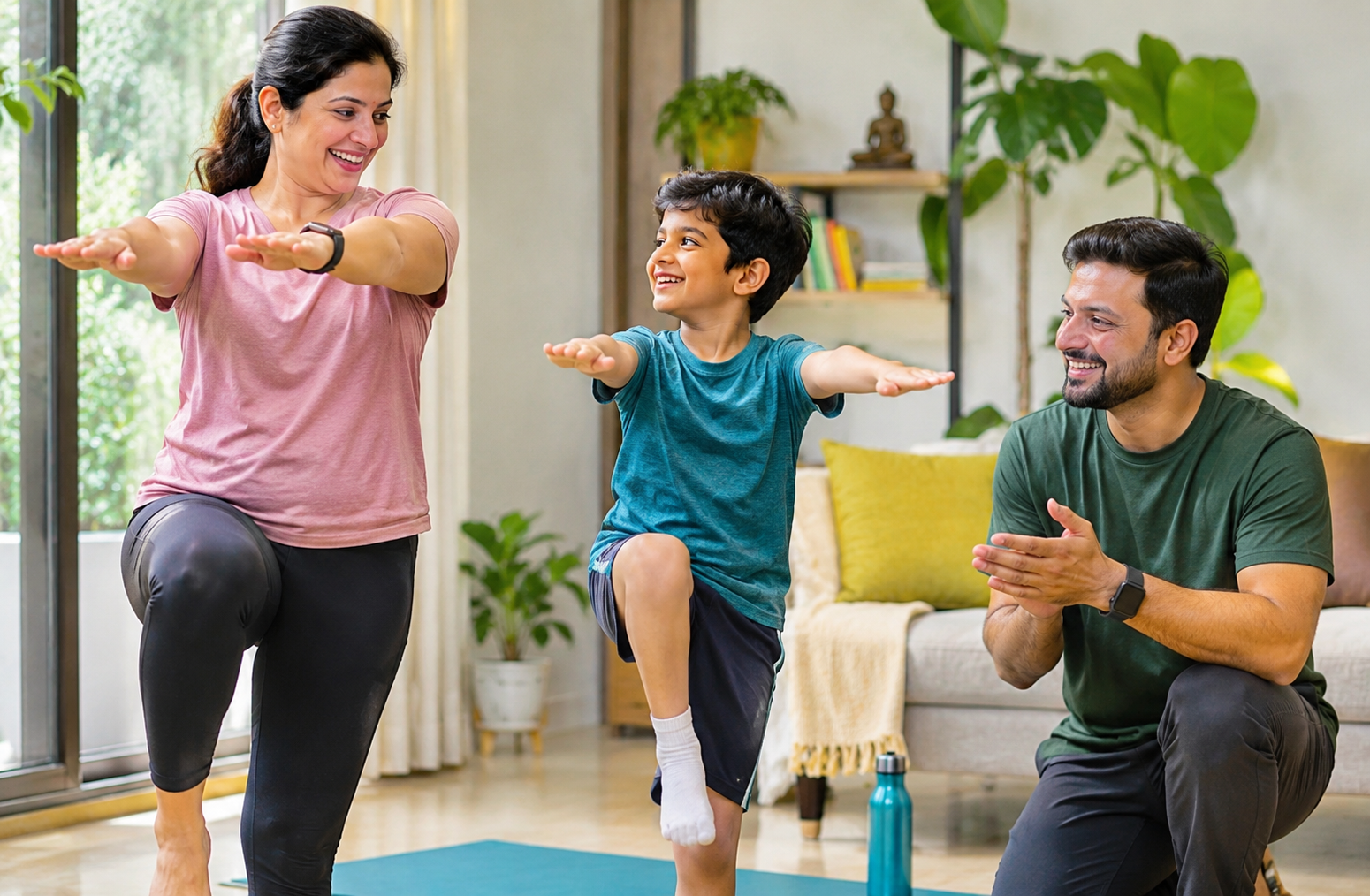
6. Move together: Do the guided home exercises with your child, take an evening walk, or swap 20 minutes of screen time for play. Fit India guidelines suggest children aged 5 to 18 need at least 60 minutes of activity every day, and family time is the easiest way to get there.
As Dr Birwa Bhatt notes, these small actions create a positive snowball effect. When a child has a role to play at home, parents soon notice a drastic change in their manners, focus and attitude.
School, Coaches and Parents: One Team for Your Child
Dr Birwa Bhatt is careful to say that schools still matter. Good teachers inspire and transform lives. But parents cannot outsource the job of raising a thoughtful, emotionally secure and capable human being.
FutureFit365 works on both sides of this partnership. Through our school partner programme, we run student fitness assessments with 10 partner schools across Ahmedabad. Through the parent app, families see the same data and know exactly where to help. Schools, coaches and parents finally work from one shared picture of the child.
The result is consistency. A child hears the same message about posture, food and effort in school, in sessions and at home. That consistency is what turns a 12 week programme into a lifelong habit, and what our year-round FutureFit365 membership is designed to protect.
Raise a FutureFit Child, Together
Dr Birwa Bhatt ends her article with a line every parent should remember: a child who is empowered at home will outperform an academically brilliant child who lacks that foundation, daily, and twice on Sunday.
That is exactly what FutureFit365 is built to do. We bring the science, the coaches and the doctors. You bring the love, the example and the everyday consistency. Together, we raise children who are strong in body, steady in mind and ready for the future.
Ready to start? Book your child's development assessment or message us on WhatsApp to talk to our team.
Frequently Asked Questions
Why is parenting important in a child fitness programme?
Children spend most of their day at home, where habits around screens, food, sleep and emotions are formed. A fitness programme builds skills in sessions, but parents keep those skills alive every day.
How are parents involved in FutureFit365?
Parents receive the assessment report, track progress on the parent app, get posture alerts and nutrition tips, and follow guided home exercises. They also get advice from the FutureFit365 expert team.
Do parents need to attend FutureFit365 sessions?
No, Parents do not need to train with their child. Staying informed through the app and supporting home routines is what makes the difference.
What can parents do at home to support their child's development?
Show affection openly, give children small responsibilities, listen without judgement, limit screen time and move together as a family for part of the recommended 60 minutes of daily activity.
Where is FutureFit365 located?
FutureFit365 is based at Sun-n-Step Club, Ghatlodiya, Ahmedabad, and also runs programmes in partner schools across the city.
Ready to transform your child's fitness?
Explore our age-specific movement programs and clinical assessments.