Why Childhood Fitness Is the Foundation of Lifelong Health
Written by
FutureFit365
Why is childhood fitness so important?
Childhood is an important time to develop the movement skills and healthy routines that support wellbeing as children grow. Regular activity supports heart and lung fitness, bone health, healthy weight, mental wellbeing and learning.
Key facts every parent should know:
· The World Health Organization (WHO) recommends that children and teenagers aged 5–17 do an average of at least 60 minutes of moderate-to-vigorous physical activity each day across the week.
· Vigorous aerobic activity, along with activities that strengthen muscles and bones, should be included on at least 3 days a week.
· The American Academy of Pediatrics reports that around 90% of peak bone mass has been accrued by age 18. (AAP guidance)
· A WHO-led study using data collected in 2016 found that 81% of school-going adolescents aged 11–17 worldwide were not sufficiently active. (WHO summary)
Running, cycling, dancing and active games help children build a positive relationship with movement. FutureFit365 assessments help Ahmedabad parents understand a child's starting point.
What does childhood fitness really mean?
Childhood fitness is more than sport. It is a child's ability to move and play, supported by five connected areas:
· Heart and lung fitness: stamina for active play and exercise.
· Muscular strength: the ability to climb, push, pull and control movement.
· Mobility and flexibility: comfortable movement of joints and muscles.
· Movement skills: running, jumping, throwing, catching and balancing.
· Confidence and wellbeing: willingness to try activities and learn new skills.
Six ways childhood fitness supports lifelong health
1. It supports heart and metabolic health
Regular activity improves cardiorespiratory fitness and supports healthy blood pressure, cholesterol and blood-sugar regulation. Brisk walking, cycling, swimming, dancing and outdoor games can all count. (WHO guidelines)
2. It supports developing bones
Weight-bearing activities such as running, jumping, skipping and basketball support developing bones. The AAP reports that about 90% of peak bone mass has been accrued by age 18. Activity supports bone development but cannot guarantee that a person will avoid fractures or osteoporosis. (AAP bone health guidance)
3. It develops movement skills
Running, jumping, throwing, catching and balancing are foundations for many sports and everyday activities. Practising different movements can help children feel more comfortable joining games and trying new activities.
4. It supports learning and emotional wellbeing
Physical activity is linked with benefits for cognitive health, including academic performance and executive function. WHO also reports mental health benefits, including fewer symptoms of depression. It complements, but does not replace, educational or mental-health support. (WHO evidence review)
5. It helps children build strength and healthy routines
School, tuition and recreational screens can leave less time for movement. Active play, age-appropriate strength exercises and mobility activities help develop muscular fitness. Persistent pain or posture concerns should be assessed by a health professional.
6. It builds confidence and social skills
Learning a skill and practising with a team can build confidence and persistence. Team activities also help children practise communication, cooperation and handling success and disappointment.
The reality for Indian children
The 2022 India Report Card on Physical Activity gave overall physical activity a C grade and sedentary behaviour a D− grade. The report also noted that sedentary behaviour had worsened across the 2016, 2018 and 2022 report cards. These grades summarise the evidence available to the researchers; they do not mean that every child has the same activity level.
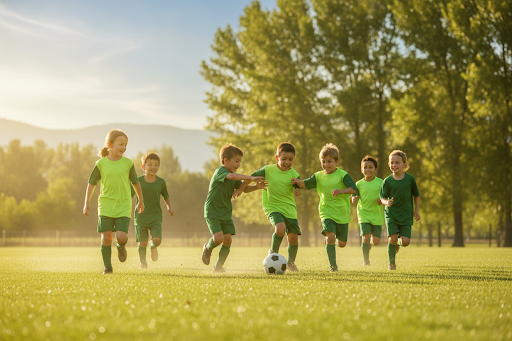
Build movement into family routines through outdoor play and activities children enjoy.
How much physical activity does a child need?
WHO recommends an average of at least 60 minutes of moderate-to-vigorous physical activity per day across the week for children and teenagers aged 5–17. Vigorous aerobic activities and muscle- and bone-strengthening activities should be included on at least 3 days each week. (WHO recommendations)
Activity | How often | Examples |
Moderate-to-vigorous aerobic activity | At least 60 minutes a day on average across the week | Cycling, brisk walking, football, dancing, swimming |
Vigorous aerobic activity | Include on at least 3 days a week | Running games, fast skipping, swimming laps, energetic tag |
Muscle strengthening | Include on at least 3 days a week | Climbing, age-appropriate bodyweight exercises, animal walks |
Bone strengthening | Include on at least 3 days a week | Jumping, hopscotch, skipping rope, basketball |
The 60 minutes is an average across the week, not a test to pass every day. Less-active children can start with manageable periods and build up gradually.
An age-by-age guide to childhood fitness
Use these age ranges as broad guidance; children develop at different rates.
Age | Main focus | Activity ideas |
5–7 years | Enjoyment and basic movement | Hopscotch, ball games, balancing, playground climbing |
8–10 years | Coordination and trying different activities | Skipping, cycling, swimming, relay games, beginner yoga |
11–13 years | Movement quality, stamina and strength technique | Team sports, bodyweight movements and supervised age-appropriate strength work |
14–15 years | Consistency, fitness and sport skills | Structured activity, sport-specific practice, recovery and sleep routines |
Strength activities should match the child's development and ability to follow instructions. The AAP says appropriately designed and supervised resistance training can be suitable for children and adolescents; there is no need to wait for a particular birthday. Start with technique, control and suitable loads, not heavy lifting. (AAP clinical report)
Why children should try different sports
A child showing talent may create pressure to specialise early. For most children, varied activities build movement skills and keep sport enjoyable. The AAP says participation in multiple sports at least until puberty can reduce injury, stress and burnout. Later specialisation may suit some sports and goals, but consider the child's health and interests. (AAP guidance on sports specialisation)
How FutureFit365 supports child development in Ahmedabad
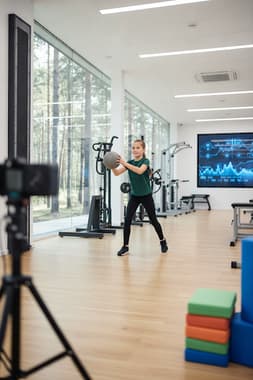
FutureFit365 is an Ahmedabad child health and performance programme for ages 5–15, combining fitness assessment, movement development, nutrition guidance and progress tracking. When comparing a child fitness programme in Ahmedabad, ask how it assesses ability, adapts activities to age, supervises sessions and reports progress. Its 12-week development pathway has four phases:
1. Understand (weeks 1–2): baseline fitness, posture and movement screening, lifestyle and nutrition review.
2. Build (weeks 3–6): movement skills, strength, bone health, mobility and healthy habits.
3. Develop (weeks 7–10): coordination, balance, agility, teamwork and sports skills.
4. Grow (weeks 11–12): reassessment, a growth report and next-step recommendations.
Parents can explore the parent programme, progress reports and school partnerships. Activities should suit each child's development and health needs.
Frequently asked questions
Why is childhood fitness important?
It supports heart and lung fitness, bone health, strength, healthy weight, cognitive health and emotional wellbeing. Enjoyable habits can help children remain active as they grow.
How much exercise does a child need every day?
WHO recommends an average of at least 60 minutes of moderate-to-vigorous activity a day across the week for ages 5–17, including vigorous aerobic and muscle- and bone-strengthening activities on at least 3 days.
Can children do strength training?
Yes. With proper supervision, children can do age-appropriate strength activities when they can follow instructions. Focus on technique, control and suitable resistance, not heavy or unsupervised lifting.
What if my child avoids exercise or gets tired quickly?
Offer enjoyable, manageable activities and build gradually. If your child has persistent pain, unusual breathlessness, dizziness or other concerning symptoms, speak with a healthcare professional.
Give your child a healthier future, starting today
Childhood fitness is not about making every child an athlete. It is about developing movement skills, strength, confidence and habits that support an active life. Small, regular opportunities to move matter.
Would you like to understand your child's development needs? A FutureFit365 assessment can help you learn about their movement, strength, posture and next steps.
Book a FutureFit365 Assessment or chat with the team on WhatsApp.
Mind. Movement. Momentum. Building healthy, happy, active children for life.
Ready to transform your child's fitness?
Explore our age-specific movement programs and clinical assessments.